Mini Bernedoodle: Size, Price, Temperament, and Care
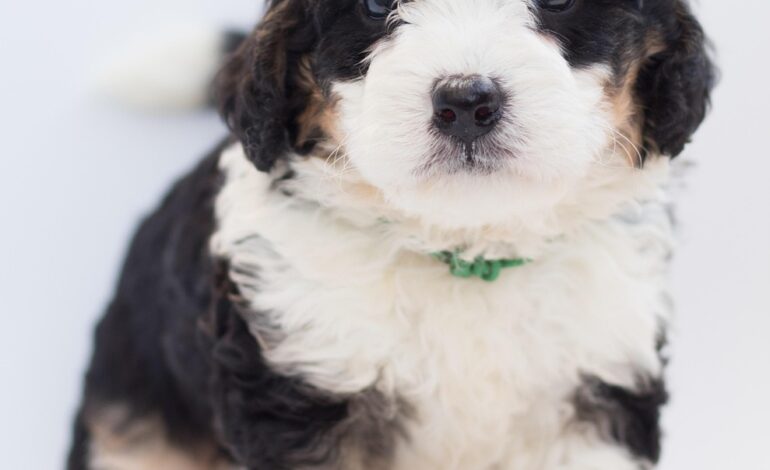
A mini bernedoodle looks like a teddy bear that follows you from room to room. A mini bernedoodle is a cross between a Bernese Mountain Dog and a Miniature Poodle, and it packs the Bernese side’s calm loyalty and the Poodle side’s intelligence into a dog that usually weighs 25 to 49 pounds. It sheds little and learns fast, but it also needs regular grooming, patient training, and a breeder who health-tests the parents.
This guide covers what one really costs in the United States, how big it grows, and how to train and feed it.
What a Mini Bernedoodle Really Is
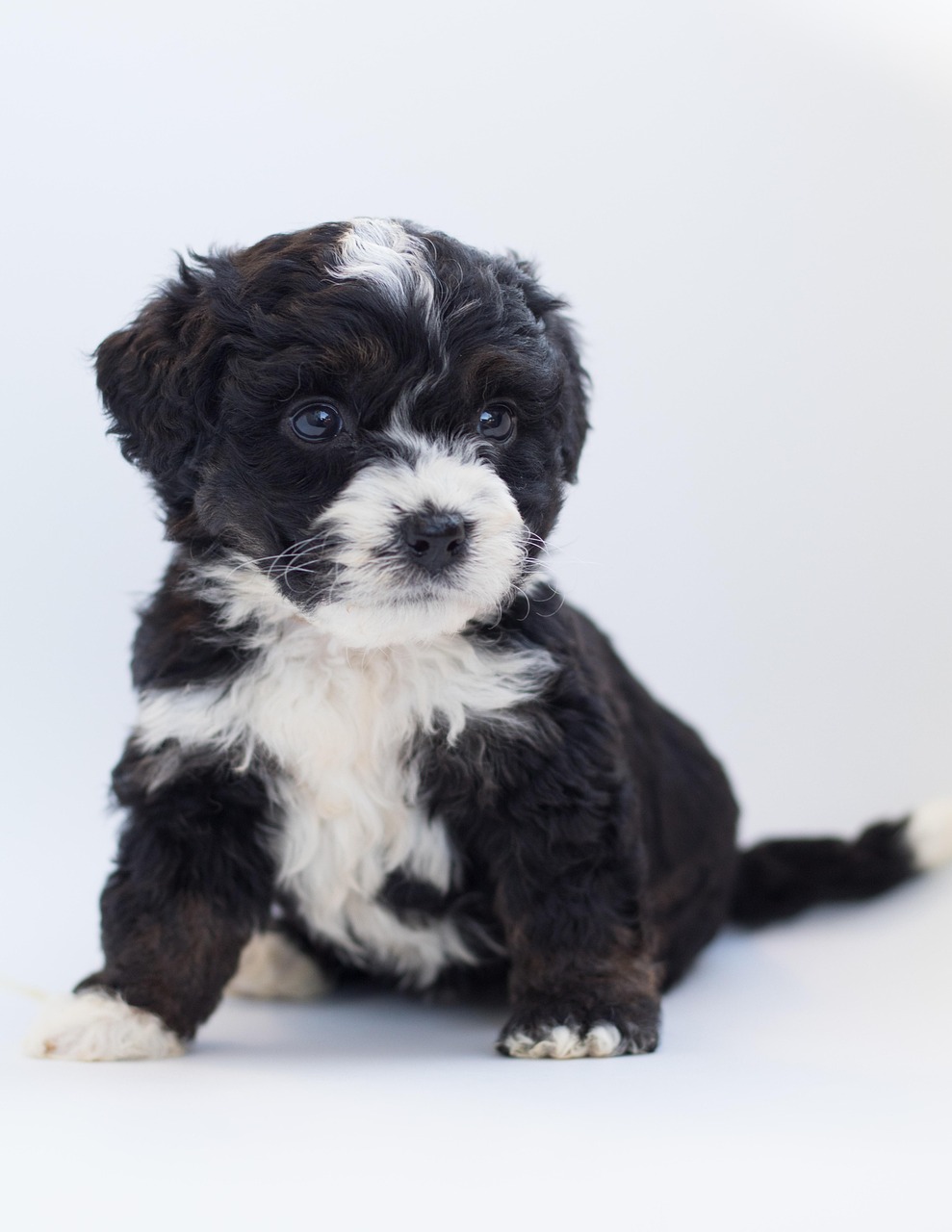
It is a deliberate cross between a Bernese Mountain Dog and a Miniature Poodle. The Bernese parent brings the size, the gentle nature, and the classic tri-color coat, while the Miniature Poodle parent brings the smaller frame, the intelligence, and the low-shedding coat. The cross was first intentionally bred in 2003, to keep the Bernese temperament in a smaller, longer-lived, more allergy-friendly dog.
Like other doodle crosses, this one is not recognized as a purebred by the American Kennel Club. That means there is no breed standard, so size, coat, and temperament can vary.
Most breeders label puppies by generation, and the label mostly affects the coat. An F1 is a first-generation cross, half Bernese and half Miniature Poodle, usually with a wavy coat. An F1B is an F1 bred back to a Poodle, about 75 percent Poodle, with a curlier coat that usually sheds less. If allergies are your main reason for choosing one, an F1B or multigenerational puppy with a curly coat is usually the safer bet, but no breeder can honestly promise a puppy that will not trigger allergies.
Mini Bernedoodle Size: How Big Do They Get
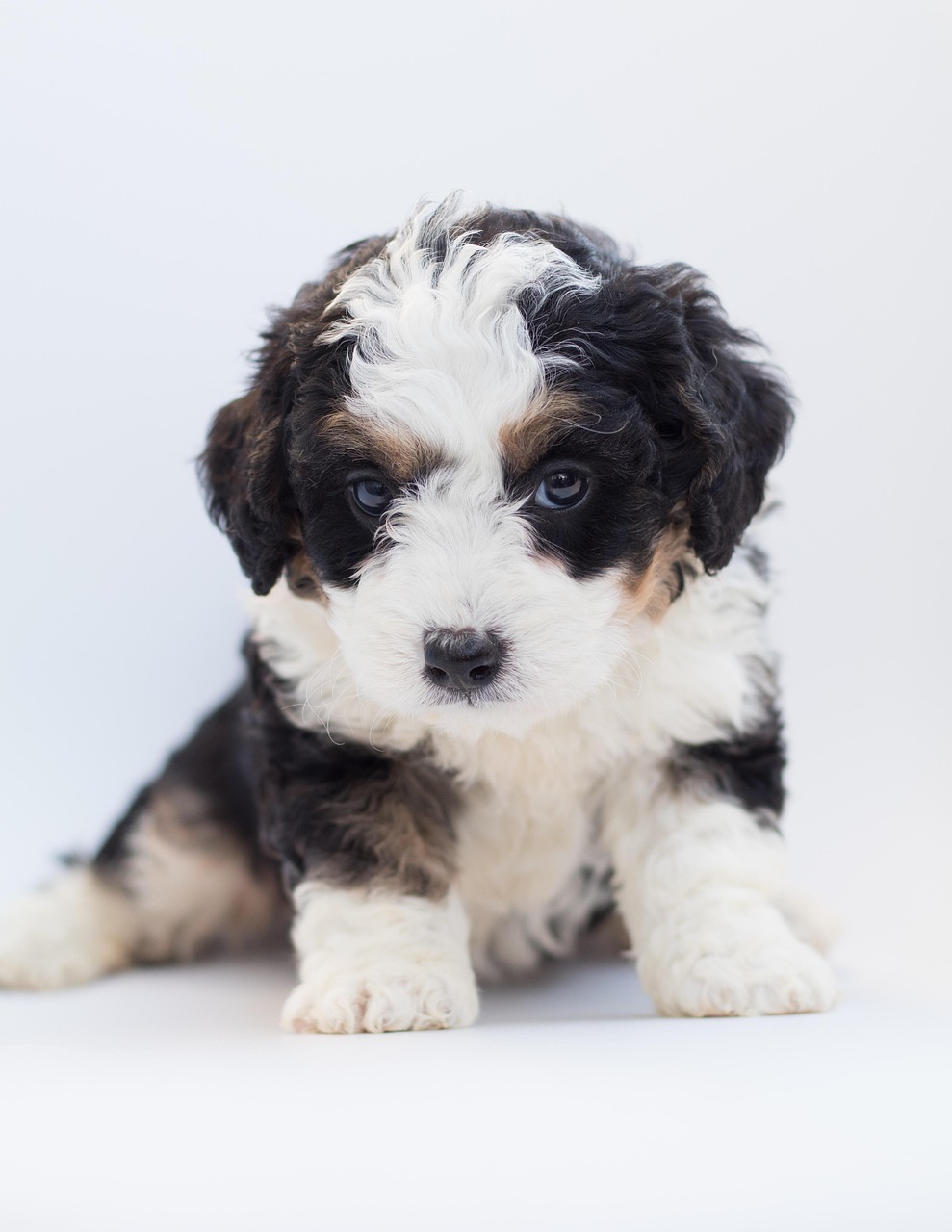
Size is the first question most buyers ask, and the hardest to answer exactly. Most mini bernedoodles grow to 25 to 49 pounds and stand 18 to 22 inches tall at the shoulder, reaching full size at around 12 to 15 months. PetMD lists the range a little lower, at 20 to 45 pounds and up to 22 inches tall, which shows how much variation there is between lines.
| Size | Adult weight | Height at the shoulder | Typical lifespan |
|---|---|---|---|
| Toy bernedoodle | Under 20 pounds | 12 to 17 inches | Up to 18 years |
| Mini bernedoodle | 25 to 49 pounds | 18 to 22 inches | 12 to 16 years |
| Standard bernedoodle | 61 to 100 pounds | Up to 29 inches | 12 to 15 years |
A mini is roughly half the weight of a standard: big enough to hike and play with children, but small enough for an apartment. Before you buy, ask the breeder how big the parents are and how big earlier litters turned out.
How Much Does a Mini Bernedoodle Cost in the USA
From a reputable breeder in the United States, a mini bernedoodle usually costs $2,500 to $5,000, and premium bloodlines, rare coat colors such as merle or phantom, and smaller sizes can push the price to $6,000 or more. The average Bernedoodle price across all sizes sits between $2,000 and $5,000, according to PetMD, with minis at the higher end.
| What you are paying for | Typical price |
|---|---|
| Mini bernedoodle, standard tri-color | $2,500 to $3,800 |
| Mini bernedoodle, rare color or smaller size | $4,000 to $6,000 or more |
| Rescue or adoption fee | $300 to $700 |
A price below $1,500 is a warning sign. Responsible breeding costs real money, and a puppy sold far below the usual range usually comes from a puppy mill, a backyard litter, or a scam listing. Other reasons to walk away are a seller who will not let you meet the mother, or many litters available at once.
The purchase price is only the start. Plan on roughly $1,500 to $2,500 in additional first-year costs, and roughly $1,500 to $3,000 per year after that. A quality breeder health-tests both parents, registers the results with the Orthopedic Foundation for Animals, and provides a written health guarantee, first vaccinations, and deworming.
Mini Bernedoodle Temperament and Personality
PetMD describes Bernedoodles as loving, kind, goofy, playful, and gentle, and the mini is no exception. Most are deeply bonded to their families, and owners often call them “velcro dogs” because they want to be near their people all day. They are usually patient with children, friendly with other dogs, and gentle with cats. They are also fairly quiet dogs, barking mainly when something surprises them or when they are playing.
Two traits are worth knowing before you buy. First, the Bernese side can bring a stubborn streak: these dogs are smart, but slow to respond when they would rather be doing something else. Second, they are sensitive dogs. They respond poorly to harsh corrections and can shut down under pressure, so patience is not optional. They also dislike being left alone for long stretches, and a mini left alone all day can develop separation anxiety and destructive habits. Early socialization matters most of all: a puppy that meets the world calmly in its first few months is far more likely to become a confident adult.
Training Your Mini
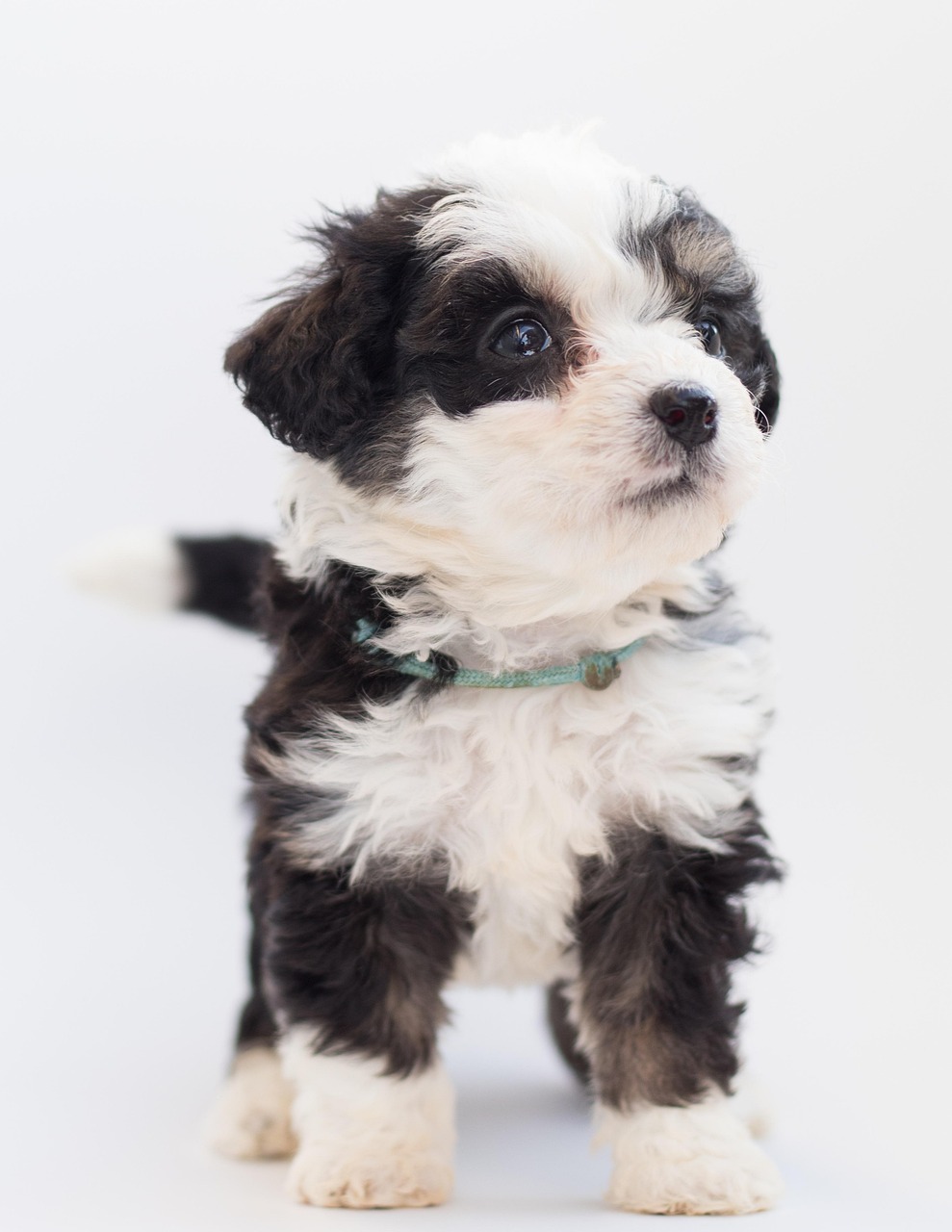
A mini bernedoodle is one of the easier doodle crosses to train, thanks to the Poodle’s intelligence and the Bernese side’s eagerness to please. Training can start the day your puppy comes home. Puppies can learn their name, “sit,” and “come” from eight weeks old. Keep each session to five or ten minutes, use small treats and praise, and end while your puppy is still enjoying it.
Start with crate training on day one, and build the potty routine around it. Take your puppy out first thing in the morning, after meals, after play, and before bed, and praise it warmly when it goes outside. Our step-by-step guide to potty training a puppy covers the routine in full. Gentle handling of paws, ears, and face matters early too, so grooming is not a battle later.
Socialization comes before everything else. Before 16 weeks, give your puppy calm, positive exposure to different people, children, friendly vaccinated dogs, car rides, and new sounds, always at the puppy’s pace. Mental work helps with the stubborn streak too.
Exercise Needs for a Mini Bernedoodle
An adult mini needs about 45 to 60 minutes of activity a day, split between walks, off-leash play, and mental enrichment. PetMD recommends at least two walks a day plus games and puzzle toys. Minis are active but not hyperactive, and they settle calmly indoors between activity sessions.
Puppies need less. Follow the five-minute rule: about five minutes of structured exercise per month of age, twice a day, until the growth plates close. Avoid long runs, steep stairs, and repeated jumping for a young puppy, because overexercising a growing puppy can damage developing joints.
A securely fenced yard helps, but it is not a substitute for walks and training. If you are thinking about how to keep a dog safely in your yard, see our guide to the invisible fence for dogs.
Grooming a Mini Bernedoodle and Shedding
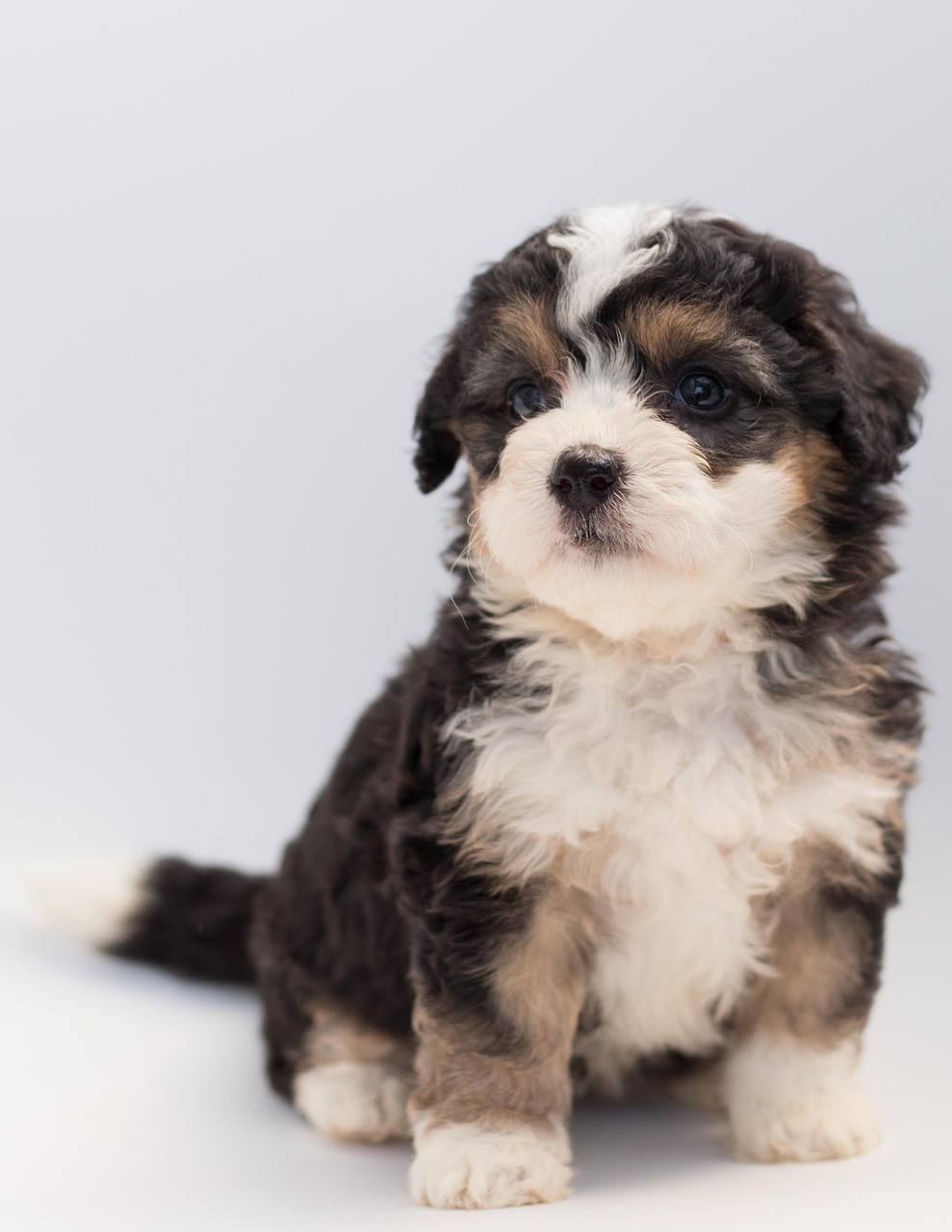
This is the part many buyers underestimate. This cross has one of the most demanding coats of any doodle cross. The wavy or curly coat grows continuously, like a Poodle’s, and it mats quickly behind the ears, under the collar, and around the legs. Skip the routine and you get painful mats that often force a full shave-down.
Brush three or four times a week at minimum, often daily for curly coats, using a slicker brush and a metal comb. Professional grooming is needed every six to eight weeks, typically $75 to $120 per visit. Between visits, check the ears weekly and clean them after swimming, and bathe no more than about once a month, or the skin can dry out.
Do mini bernedoodles shed? Most shed lightly, and curlier coats shed least. But shedding and allergies are not the same thing. No dog is truly hypoallergenic, because allergens come from dander and saliva too, not only from fur. A wavy-coated F1 puppy can shed noticeably. If allergies are the reason you want one, spend time with the puppy and its parents first, and do not trust a breeder who promises a hypoallergenic dog.
Health Problems in Mini Bernedoodles
Minis are generally healthier than either purebred parent, and they usually live 12 to 16 years, far longer than the 7 to 10 years of a purebred Bernese Mountain Dog. PetMD lists the mini lifespan at 14 to 16 years. Smaller dogs tend to live longer, but the Bernese health risks do not disappear in the cross.
The conditions worth asking a breeder about are hip and elbow dysplasia, progressive retinal atrophy, von Willebrand disease, degenerative myelopathy, patellar luxation, and skin allergies. Hip and elbow dysplasia are inherited joint problems that can lead to arthritis, and extra weight makes them worse. Progressive retinal atrophy causes gradual vision loss, with night blindness often the first sign, and there is no treatment.
A responsible breeder should provide OFA or PennHIP hip and elbow evaluations, eye exams, DNA panels for progressive retinal atrophy, degenerative myelopathy, and von Willebrand disease, and a cardiac clearance.
One emergency is worth knowing about. Bloat, or gastric dilatation-volvulus, is when the stomach fills with gas and twists. It is a life-threatening emergency: a swollen belly, restlessness, and unproductive retching need a vet at once. Our guide to emergency vets explains when to go and what to expect.
This article is general information, not veterinary advice. Your veterinarian should make the final call on food, vaccines, and any health concern.
Feeding Your Mini Bernedoodle
Feed a food approved by the Association of American Feed Control Officials, which ensures a complete and balanced diet. Puppies should eat three or four small meals a day on a regular schedule, moving to two meals a day as adults. A mini needs a food suited to its smaller size, and your veterinarian can confirm the right choice.
Keeping a mini lean matters more than usual, given the joint risks on both sides of the family, so measure meals instead of free-feeding. Fresh water should always be available, and treats should stay small and count as part of the day’s food. Never feed cooked bones, chocolate, grapes, raisins, onions, or xylitol.
Flea, tick, and heartworm prevention is part of everyday care too, not an optional extra. A monthly chew covers all three in most of the United States, and our guide to NexGard Spectra for dogs explains what US owners should know. Your veterinarian can confirm the right product and dose for your dog’s weight.
Mini Bernedoodles in Apartments and Family Life
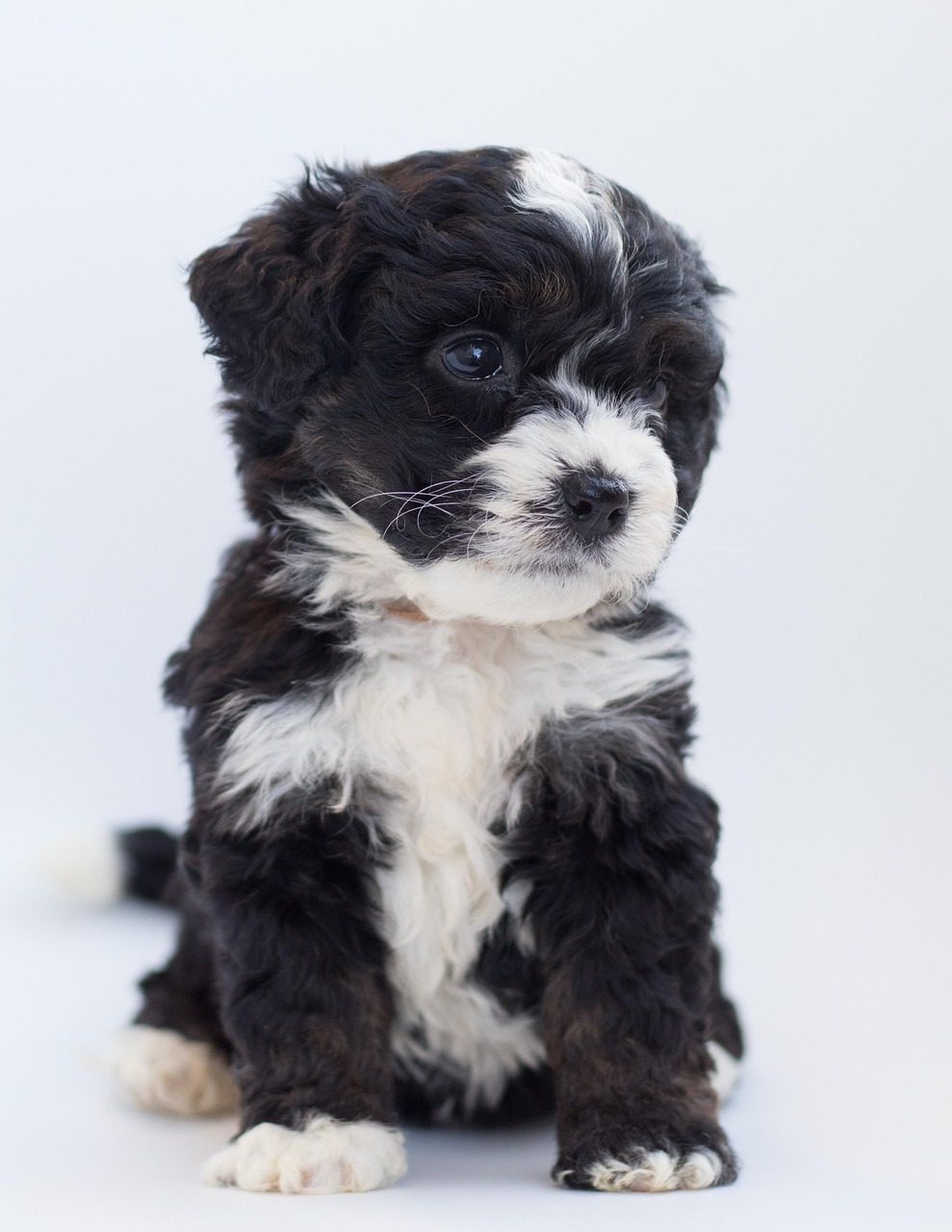
A mini adapts well to apartment living when it gets daily exercise and mental stimulation. Its moderate size, quiet indoor manner, and low-shedding coat make it one of the better doodle choices for a smaller space.
An apartment owner should plan for two solid walks a day plus a play session, puzzle toys for mental work, crate training from day one, and a park nearby. The harder part of apartment life is not the space but the time: a mini that is left alone for eight or nine hours a day will be unhappy, whatever the size of the home.
With children, minis are usually patient and gentle. Children should treat the dog gently, leave it alone while it eats and sleeps, and never tease it. A young mini can still knock over a small child by accident during play, so watch playtime closely.
Buying or Adopting a Mini Bernedoodle
If you decide to buy, look for a breeder who health-tests both parents and raises the puppies in the home. A good breeder will show you the health clearances, let you meet the mother, and stay in touch after you take the puppy home. Be prepared to join a waitlist, especially for a tricolor mini.
If you decide to adopt, contact a doodle rescue or your local shelter. Adoption costs far less, with rescue fees typically $300 to $700. Either route can bring you a wonderful companion, as long as you choose carefully.
Before you bring one home, be honest about the cost, the grooming, and the years of commitment ahead. One can live 14 to 16 years, and that is a long time to share your home with a dog that needs brushing several times a week and company for most of the day.
Frequently Asked Questions
How big does a mini get?
Most grow to 25 to 49 pounds and stand 18 to 22 inches tall, reaching full size at around 12 to 15 months. PetMD lists the range a little lower, at 20 to 45 pounds and up to 22 inches tall.
How much does one cost?
From a reputable breeder in the United States, one usually costs $2,500 to $5,000. Rare colors, premium bloodlines, and smaller sizes can push the price to $6,000 or more. Adoption usually costs $300 to $700.
Are mini bernedoodles hypoallergenic?
No. No dog is truly hypoallergenic, because allergies are triggered by dander and saliva proteins, not fur alone. Minis shed lightly, and curly-coated F1B puppies shed least, which may cause fewer symptoms for some people.
Do mini bernedoodles shed a lot?
Most shed lightly, but it depends on the coat. F1B and multigenerational puppies with curly coats usually shed least, while F1 puppies with wavy coats can shed more. Their thick coats need frequent brushing either way.
Are minis good apartment dogs?
Yes, when they get enough exercise and mental stimulation. Their moderate size, quiet indoor manner, and low-shedding coat suit smaller spaces well. They do not do well left alone for long hours, whatever the size of the home.
How long do minis live?
Most live 12 to 16 years, with PetMD listing 14 to 16 years for the mini size. That is far longer than a purebred Bernese Mountain Dog, which typically lives 7 to 10 years.
Are mini bernedoodles hard to train?
They are intelligent and eager to please, so they are not hard to train, but they can be stubborn and sensitive. Short, positive training sessions and early socialization work best.
The Bottom Line
A mini bernedoodle is not an easy first dog, and it is not a cheap one. It is smart, loyal, and eager to be near you, and it grows into a gentle, devoted adult when it gets early training, careful socialization, and enough exercise and mental work. But it also needs brushing several times a week, professional grooming every six to eight weeks, and a breeder who health-tests the parents.