Top 10 Most Dangerous Dogs in the World

Dogs have lived alongside humans for thousands of years and have generally acted as faithful companions, workers, guards, or family pets. But in some cases certain breeds are noted for their strength, speed, bravery, and protective instinct. It is because of these characteristics that they end up being included on lists of the most dangerous dogs breeds. Generally, when people look for dog breeds that are dangerous or powerful,, they tend to concentrate on these physical attributes rather than on the individual behavior of the dog.
The guide examines the top 10 most dangerous dogs in the world with a focus on people in the USA. However, it is necessary to realize that the term ‘dangerous’ is relative. The breed of a dog by itself does not mean that it will bite. Various factors such as training, socialization, health, breeding, supervision, and the conditions in which it lives all have an influence. The American Veterinary Medical Association recommends that dogs should be judged on the basis of their behavior rather than merely their breed.
What gives a dog breed a potential danger?
While a dog’s size may have an effect on the amount of harm it could do in a given situation, size by itself is not the determining factor. Confidence, territorial instincts, prey drive, fear, a lack of socialization, pain, and previous experiences all play a role in a dog’s behavior. For this reason labels such as ‘aggressive dog breeds’ or ‘high-risk dog breeds’ should be used with care. A large muscular dog may appear frightening but won’t necessarily behave aggressively.
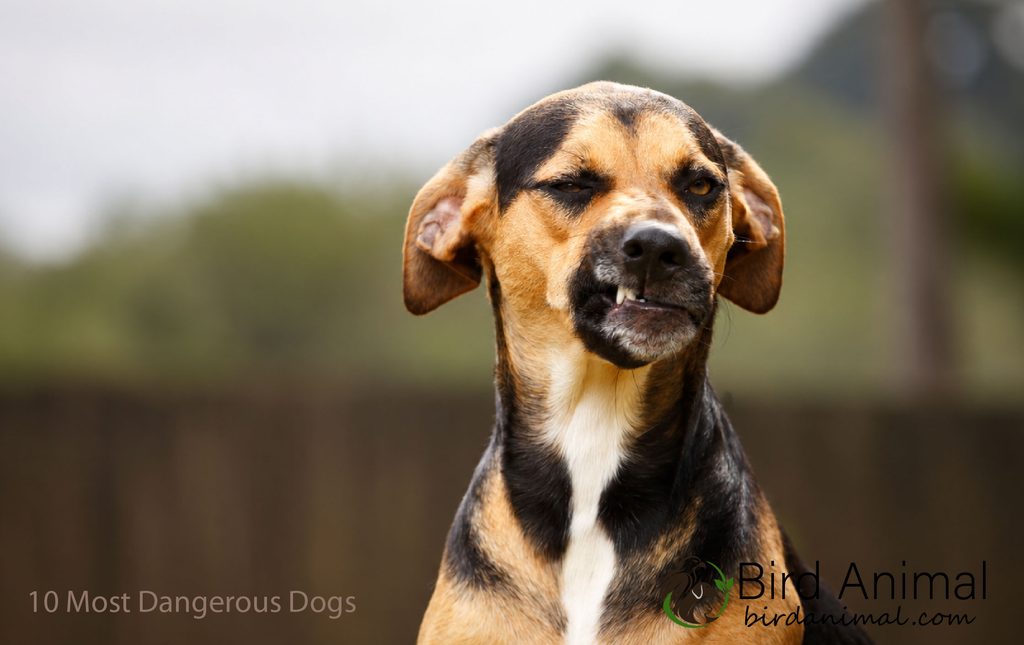
If you want to know why a particular dog breed may be regarded as aggressive, you have to go beyond its appearance. A dog may become defensive if it is frightened, trapped, or injured, or if it is guarding something. The way a dog behaves when it grows up is also influenced by its early experiences. Hence, when people ask why some breeds are described as dangerous, what they are usually referring to is a combination of the dog’s physical capabilities, its behavior, and the environment. The AVMA states that any dog is capable of biting.
“The American Veterinary Medical Association says that any dog is capable of biting.”
Strength, Temperament, Bite Potential, and Training
It is most important to take power into account when a dog is not in control. A large guard dog is capable of knocking a person down before it bites them. If a hunting dog is not properly managed, it may chase after smaller animals. Conversely, trained protective dogs are able to remain calm since their owners establish clear boundaries from the beginning. Although genetics do contribute, the influence of training and environment is significant in determining how these characteristics appear.
How We Selected the Top 10 Most Dangerous Dogs in the World
There isn’t an official scientific list that ranks the most dangerous dog breeds in the world, nor do reliable organisations rank dogs from the safest to the most dangerous. Moreover, it is usually difficult to determine a dog’s breed after it has bitten, particularly in the case of mixed breeds. For these reasons, the present ranking takes into account factors such as strength, the breed’s original purpose, its guarding behavior, athleticism, independence, how difficult it is to handle, and the potential for serious injuries.
When discussing the most aggressive dogs, it is necessary to draw this distinction since aggression and physical power are not identical. A small dog may show aggressive behavior frequently but will cause less harm, whereas a calm mastiff may not act aggressively often but once it does, it can be difficult to stop. The ranking given below is based on overall risk and not simply on whether a breed is naturally violent.
Factors Used to Compare Powerful Dog Breeds
The comparison takes into account physical build and history; it also looks at factors such as physical build, history, guarding instinct, independence, athleticism, and the amount of training required. A number of the breeds mentioned are working or guard dogs, and the AKC states that working breeds are generally strong, intelligent, alert, and protective, which is why good training is so important.
The table provides a brief summary of these breeds; some are renowned for being strong guard dogs, while others have a background in hunting or work. They are occasionally referred to as dangerous or the strongest guard dogs, but these descriptions mainly relate to their capabilities rather than indicating that they are always aggressive.
| 1 | Pit Bull-type dogs | Terrier and working heritage | High | Strength, energy, responsible socialization |
| 2 | Rottweiler | Guardian and working dog | Very High | Protective instincts and size |
| 3 | Cane Corso | Property guardian | Very High | Assertive temperament and power |
| 4 | Dogo Argentino | Big-game hunting | Very High | Athleticism and prey drive |
| 5 | Presa Canario | Cattle work and guarding | Very High | Territorial guarding tendencies |
| 6 | Boerboel | Farm and property guardian | Extremely High | Massive size and confidence |
| 7 | Tosa Inu | Historical fighting and guarding | Very High | Strength and experienced handling |
| 8 | Akita | Hunting and protection | High | Independence and protectiveness |
| 9 | German Shepherd | Herding, police, working | High | Energy and mental stimulation |
| 10 | Doberman Pinscher | Personal protection | High | Speed, intelligence, and energy |
Breed descriptions and historical roles match breed information from the American Kennel Club, United Kennel Club, and Fédération Cynologique Internationale.
Pit Bull—One of the Most Dangerous Dogs Breeds
The name “Pit Bull” is confusing, as it usually refers to a type rather than to a single, universally defined breed. The AVMA states that the term may apply to different kinds of pit bull-type dogs. The United Kennel Club does recognize the American Pit Bull Terrier; its standard highlights strength, confidence, athletic ability, and enthusiasm. Because of that strong build, people need to take responsibility for owning such a dog.
It is common for people to search for “Are pit bulls dangerous dogs since the breed has a controversial reputation. History is a factor here as some of the ancestors of the bull and terrier were associated with blood sports, which is one of the reasons why pit bulls come up in conversations about historical fighting dog breeds. However, history does not show that an individual modern dog will attack people and proper breeding, early socialization, exercise, supervision, and reward-based training can all have a great effect on a dog’s everyday behavior.
Pit bulls are frequently seen as dangerous because, although they may appear compact, they are in fact quite strong, athletic, and full of energy. Problems can develop if owners promote aggressive behavior or fail to notice the warning signs. It is preferable to focus on a dog’s temperament, its background, and its social abilities rather than merely on its appearance. Moreover, it is not always simple to identify a dog’s breed accurately.
2. Rottweiler – A strong and protective guard dog
Rottweilers have both strong muscles and a confident, intelligent temperament; their ancestors were engaged in tough working tasks. Today’s Rottweilers are still capable of acting as guardians. The AKC characterizes the breed as robust and powerful, while also highlighting its protective role within the family. It is this combination that is why Rottweilers are often classified as strong protection dogs.
Are Rottweilers a danger to people? Yes, they are capable of causing serious injuries if not properly controlled due to their size and strength. However, this does not imply that all Rottweilers are aggressive. A well-behaved Rottweiler requires thorough training, socialization, exercise, and clear household rules. It is also important for owners to prevent their dogs from carelessly dealing with strangers or other animals.
Why Rottweilers Require Responsible Training
A Rottweiler must not be left to make up its own mind. Obedience training should be carried out calmly, as it provides the dog with proper structure. Teaching the dog skills such as recall, appropriate behavior on a leash, and calm greetings makes everyday life simpler. Given that they are strong, it is all the more important not to omit training. Those with no experience should carefully consider whether they can provide the necessary structure and consistency.
3. Cane Corso—an powerful and Dangerous Dogs
The Cane Corso is a breed that makes a more impressive first impression than most dogs. This substantial Italian mastiff has longstanding roots in practical work. Since the name of the breed is linked to guarding, the AKC characterizes the Corso as being assertive, confident, intelligent, and highly trainable. It is for these qualities that the breed is included among the Powerful mastiff breeds and the serious territorial dog breeds.
Anyone who is asking about how dangerous a Cane Corso is should consider how the dog is looked after. If you’re trying to find out how dangerous a Cane Corso is, it’s more important to think about how it is managed rather than its appearance. Adult Corsos are extremely strong and tend to be very protective of their home and their family. For this reason they require early socialization and thorough obedience training. A course that is bored or that is not well managed can be difficult to handle. With proper training, their confidence can be channeled into positive behavior. Doesn’t every Corso crave conflict? Since the dog is so powerful, mistakes can have more serious consequences. Owners must handle the dog with confidence but without being harsh. Regular exercise, mental stimulation, controlled meetings with other animals, and clearly defined household boundaries all contribute to stability. The AKC specifically highlights the breed’s intelligence, its protective nature, and its need for activity.
4. Dogo Argentino, Fearless Big-Game Hunting Dog
The Dogo Argentino was not bred to be a lazy dog for sitting on people’s laps. Instead, Argentine breeders developed it for use in tough pack hunting. The AKC says that Dogo Argentinos were used for hunting large game, such as wild boar and pumas. The kind of work they did required strength, quick reactions, endurance, intelligence, and courage. It is these qualities which still account for the breed’s strong reputation at the present day.
Since they have a strong hunting instinct, such dogs can find it difficult to behave properly when they come across other animals. However, having a prey drive does not mean that they are aggressive towards people. It is important for owners to understand the difference. Early socialization, careful introductions, well-secured fencing, and obedience training are all very important. Problems can quickly arise if these active dogs are bored and not trained. (Regarding the Dogo Argentino)
The Dogo Argentino was developed for practical use rather than merely for appearance; it requires a good deal of exercise and mental stimulation. Owners must teach it a strong recall and use secure leashes when necessary. Any interactions with small animals should be carefully monitored. The objective is not to alter the dog’s natural disposition but to direct its energy safely through proper training.
5. Presa Canario, Strong and Dangerous Dogs
The Presa Canario is from the Canary Islands in Spain; traditionally, it has been used to handle cattle and protect property. The AKC states that the breed is particularly well suited for guarding, while the UKC’s guidance also describes a powerful and courageous dog developed for work with cattle and for protecting a home. This background helps to explain which dog breeds have a strong instinct for guarding.
Presa Canarios are generally very loyal to their families but do tend to be cautious around strangers, which is why socialization is important. Owners must establish control while the dog is still small. Once the large guardian dog begins to exhibit undesirable behaviours, it becomes considerably more difficult to train. Early socialization needs to be calm, positive, gradual, and carefully supervised.
Why the Presa Canario Needs an Experienced Owner
Combining power and independence without some structure is difficult. Owners must maintain good control when using a leash and should conduct training with proper timing. Guests should be presented in an organized manner, not with random greetings. It is also necessary to have secure fencing. The UKC points out that Presas are very attached to their families but naturally cautious around strangers.
6. Boerboel – Massive South African Dangerous Dogs
The Boerboel is a large South African guardian breed developed on farms and homesteads. Its imposing frame isn’t merely cosmetic. The AKC describes Boerboels as confident, intelligent guardians of home and family. It also emphasizes early socialization and obedience. Those qualities place the breed among the world’s most substantial guardian dogs.
When people ask about the most powerful guard dog, the Boerboel often comes up. Still, there isn’t a single proven answer. Boerboels are big, confident, and protective, with a strong working background. Dogs this large need to be well-mannered. Pulling on the leash might not seem like a big deal for a puppy, but it becomes a real problem when the dog is fully grown.
What Makes the Boerboel Such a Powerful Guardian?
Boerboels are quick learners, but they aren’t a good choice for owners who aren’t careful. Because they naturally want to guard, owners need to teach them what normal situations look like. Practicing obedience every day helps you communicate before anything stressful happens. Visitors, delivery people, kids, and other pets all need to be managed thoughtfully. Good ownership helps turn their strength into calm confidence instead of unpredictable behavior.
7. Tosa Inu – Powerful and Dangerous Dogs
The Tosa is a robust Japanese breed with a distinctive historical background. The AKC notes that Tosas were formerly bred for fighting and are now also used as watchdogs. It describes their temperament as patient, composed, bold, courageous, and generally calm. Therefore, their history shouldn’t be confused with constant modern aggression.
The Tosa stands out among fighting dog breeds because of its size and history. But it’s important to look at the full picture. Their strength and calm confidence can make them hard to handle if not managed well. Owners should provide secure handling, early socialization, and clear rules and be careful when introducing them to new dogs.
Why the Tosa Inu Is Considered a High-Power Dog
The Tosa’s risk comes mostly from its strong build and power. Just because it looks calm doesn’t mean it should be handled carelessly. Its history also doesn’t mean every Tosa is aggressive. In fact, the breed standard values calmness. Experience 8. Akita—A loyal dog but one that is also highly protective. Big, determined dog that takes both physical and behavioral skills.
8. Akita—Loyal but Dangerous Dogs
Akitas are powerful Japanese dogs known for dignity, courage, and loyalty. Their broad body and heavy bones create an imposing appearance. The AKC also describes them as traditional family protectors in Japan. This protective heritage can create a strong attachment to household members while producing greater reserve toward unfamiliar people.
An Akita’s independence is just as important as its strength. Some people think smart dogs will always obey, but that’s not usually true for independent breeds. Training takes patience and consistency. Socialization should start early and continue as the dog grows. Interactions with other dogs should be watched closely, since each Akita is different. Understanding the Akita’s Protective Temperament
A confident Akita might not always look to you for direction, so it’s important to set boundaries early—reward calm behavior around visitors, other animals, and new places. Don’t force the dog into greetings it doesn’t want. Instead, show it that staying calm is best. With good management, an Akita can be loyal without feeling like it has to decide who can be near the family.
9. German Shepherd – Intelligent and Powerful Working Dog
German Shepherds rank among the world’s best-known working dogs. Their intelligence, agility, courage, and trainability enable them to perform many demanding roles. The AKC describes the breed as a large, muscular, confident, steady, all-purpose worker. German Shepherds also appear in police and protection work, where control matters as much as physical ability.
Many people think of German Shepherds when looking for a good protection dog. But protection doesn’t mean letting the dog be aggressive without control. Good working dogs need obedience and clear communication with their handler. At home, German Shepherds need plenty of exercise and mental challenges. Without exercise, a German Shepherd can become bored and start barking, pacing, destroying things, or acting impulsively.
Can a German Shepherd Be Dangerous?
Yes, German Shepherds can cause serious injuries, just like other big dogs. But their intelligence also makes them easy to train. Good breeding, socialization, exercise, and responsible handling are 10. Doberman Pinscher. Fast and fearless protection dog. Its owner instead of making decisions on its own.
10. Doberman Pinscher – Fast and Fearless Protection Dog
The Doberman combines speed with strength. Its lean shape sometimes hides just how athletic the breed can be. Dobermans were developed with personal protection in mind. Modern dogs remain intelligent, alert, and quick learners. AKC information describes them as powerful dogs that learn easily and respond quickly.
Because Dobermans are smart, they can pick up bad habits quickly if rules aren’t clear. Inconsistent rules can confuse them. Regular exercise, obedience training, social time, and mental challenges help keep them balanced. Owners should teach both calmness and alertness. A dog that reacts to everything isn’t always a better guard dog.
Why Dobermans Are Powerful Protection Dogs
Dobermans make good guard dogs because they’re alert, quick, smart, and loyal to their owners. They aren’t just strong—they’re also fast, which means things can happen quickly. That’s why it’s important to teach them to come when called and to control their impulses. With the right training, these traits are helpful rather than problematic.
Which Dog Has the Strongest Bite Force?
Online articles frequently rank dog breeds by bite force using specific PSI numbers, but these numbers should be viewed with caution. Testing methods can be very different. Factors such as the dog’s motivation, skull size, equipment, the location of the bite, and study conditions all affect the results. So, there isn’t a simple, reliable answer to which breed has the strongest bite, which dogs have the highest bite force, or what the strongest dog breed in the world is. Jaw pressure alone doesn’t measure overall danger. Speed, body weight, persistence, behavior, victim vulnerability, and circumstances also affect injury severity. A huge bite-force number may look impressive online. It shouldn’t replace sound behavioral information.
Bite Force vs Real-World Dog Attack Risk
Bite force is a bit like engine horsepower—it shows what a dog could do, not what it will do. Just as a powerful car doesn’t always crash, a strong jaw doesn’t mean a dog will attack. The AVMA recommends focusing on behavior, context, and prevention instead of just breed rankings.
Are These Really the Most Aggressive Dogs in the World?
Not always. Just because a breed is powerful doesn’t mean it’s one of the most aggressive. Aggression is about behavior, while danger also depends on what could happen. A small dog might often act aggressively, but a big dog could cause more harm in a single incident, even if it’s usually calm.
That’s why lists of the most feared dog breeds can be misleading. A breed’s reputation often comes from its appearance, history, media coverage, or cultural beliefs. Every dog is different. The AVMA now focuses on preventing bites through responsible ownership and awareness of behavior, rather than blaming the breed.
Dangerous Dogs and Aggressive Dogs Aren’t the Same Thing
A frightened dog could become aggressive to create some distance. If people approach a territorial dog, it may react. Pain can also affect how a dog behaves. When owners understand the reason for a dog’s particular behavior, they can respond more effectively. Although punishing warning signs at times may stop the warnings, it does not address the real issue.
Are Dangerous Dogs Breeds Safe for Families?
Several robust breeds can thrive in households. Yet whether a so-called dangerous breed makes a good family pet depends on the family. Factors such as the owners’ experience, the presence of children, the amount of available space, the presence of other pets, the time available to exercise the dog, and the owner’s willingness to train all play a role. Some guard dog breeds don’t cope well with inconsistent rules, particularly when owners aren’t prepared for the strength their dogs reach as they mature.
Calling some breeds ‘dangerous family dogs’ can be misleading. Families shouldn’t pick a dog because it’s seen as dangerous. It’s better to look for a dog with a stable temperament that fits your family. Are big dogs more dangerous than small ones? Big dogs can cause more severe injuries, but size doesn’t determine aggression. Kids should always be supervised around dogs, no matter the breed. The CDC recommends safe, supervised interactions.
Powerful Dogs Around Children and Other Pets
One should not let children climb on dogs, disturb them when they are eating, or corner them when they are resting. Adults have to be aware of the times when a dog would like to be left alone. The CDC advises avoiding dogs that appear to be scared, sick, angry, or withdrawn, and simply keeping a close watch can stop many problems from developing into bites.
Can it be safe to train aggressive dogs?
The question of whether aggressive dogs can be safely trained relies on identifying the cause of the aggression; fear requires a different method from that needed for territorial behavior. In the case of aggression due to pain, a vet should examine the dog first. Resource guarding has to be dealt with carefully. When it comes to serious cases, it is best to seek advice from a vet or a behavior specialist rather than just trying out the ideas you find on the internet.
Training is most effective when owners establish routines that the dog can rely on. It is important to reward good behavior and not to push the dogs beyond their capabilities. They should be gradually introduced to new situations in a controlled manner. Exercise and mental stimulation help to reduce frustration. Most importantly, proper management prevents dangerous behaviors from becoming habitual during the training process.
Training, Socialization, and Professional Help
What socialization involves is not getting the dog to greet all sorts of people but rather teaching it to remain calm in the presence of different people, noises, surfaces, other animals, and various places. If the dog already lunges or bites, it is far more important to seek professional assistance; safety must always take priority over attempts to show that the dog can cope with difficult situations.
How to Safely Own a Powerful Dog Breed in the USA
To learn how to handle powerful dog breeds safely, you should first do so before you take one home. You need to find out how large the breed will become and what it was originally bred for. Check the housing rules in your area as well as any other requirements. Ensure that you have secure fencing and strong equipment.
Above all, make certain that you can continue daily training for many years, not just during the puppy period. You need to establish firm management habits. Visitors should not turn into unexpected training exercises. The gates must close properly. Children must not take dogs for a walk if they are unable to control them physically. Obedience based on rewards should be maintained right into adulthood. The AKC advises that large, naturally protective working breeds require proper socialization and training.
Responsible Ownership Reduces Risk
Suppose a family takes home a Cane Corso puppy. Although it might seem endearing for the puppy to pull on visitors when it is twelve weeks old, this behavior can become a major issue when the dog matures. It is important to teach the puppy to greet calmly from an early age, and this example illustrates the advantage of preventing problems rather than trying to cure them later on. In the case of strong breeds, little habits that are picked up as puppies can develop into serious problems as adults. The World: Myths vs Facts
It is a common misconception that all dogs belonging to a feared breed will eventually turn aggressive, whereas this is not the case. It is also a misconception that only large dogs bite, and that too is false. Any dog is capable of biting. Some dogs are simply large and strong enough for the consequences to be more severe. Guard dogs must be suspicious of everyone. In fact, good guardians require the ability to discriminate and to exercise control. Continuous reactivity only makes daily life more difficult. Terms like ‘large aggressive dog breeds’ and ‘high-risk dog br’high-riskld never take the place of an assessment of the individual animal, its environment, its training history, and the owner’s management.
Separating Reputation from Real Dog Behavior
When it comes to identifying the most feared dogs, the responses given can seem quite dramatic. However, fear isn’t something that can be measured scientifically; features such as cropped ears, a large head, a loud bark, or a dark coat may cause people to react, but actual safety is much more dependent on the dog’s behavior and on responsible ownership than on its appearance. Should an unknown dog be behaving aggressively?
When you come across a dog that you do not know and it appears to be tense, do not approach it. Allow the dog some space. Do not disturb a dog when it is eating, sleeping, or hiding, or when it is with its puppies. The CDC also advises that you should cease any contact if the dog looks frightened, sick, or angry.
It doesn’t follow that a dog’s wagging tail always means you can go ahead and pet it. You should consider the dog’s entire body; if it shows signs such as a stiff posture, staring, backing away, growling, snapping, or attempting to get away, you should leave it alone. Children have to be kept under close observation, and, in most cases, it is better to maintain a calm distance than to try and get nearer.
Basic Dog Attack Prevention and Safety
If you aren’t familiar with a dog, ask the owner for advice on how to act around it. You should not allow children to run up to dogs they don’t know. Do not corner a dog if it is frightened. When a dog continues to behave aggressively, the owners should seek professional assistance rather than continuing to press the dog.
What is the most dangerous dog in the world?
There is no scientific basis for saying which dog is the most dangerous in the world. Although rankings may take into account factors such as size, strength, original purpose, and how difficult they are to handle, they cannot predict the behavior of any individual dog. Moreover, it is difficult to determine the breed of dogs that are mixed, so simple rankings based on attacks are not always accurate.
In reality, breeds such as Cane Corsos, Rottweilers, Boerboels, Presa Canarios, and other large guard dogs require experienced owners; this does not imply that these breeds are always aggressive, merely that errors when handling a strong dog can have serious consequences. There Isn’t One Universally Most Dangerous Dog
Risk depends on the situation. A dog that’s not socialized and running loose is different from a trained dog walking with its owner. Things like age, health, environment, supervision, past experiences, and how people act all matter. That’s why vets focus so much on prevention.
Which Guard Dog Is the Most Powerful?
People often ask which guard dog is the strongest because these breeds can look incredibly powerful. Boerboels and Cane Corsos are very strong. Rottweilers are big and confident. Dobermans are fast. German Shepherds are easy to train for many jobs. Presa Canarios have a long history as guard dogs.
There isn’t a single ‘strongest’ guard dog. A better question is which breed matches your home and experience. The most powerful dog might be the wrong choice if you can’t train and manage it well.
Which Dogs Are Best for Protection?
The best protection dog depends on what you need. A family watchdog is different from a professionally trained working dog. For most families, it’s better to have a dog that’s stable, obedient, confident, and predictable rather than aggressive. A dog that warns you and then listens to commands gives you more control.
FAQ About the Top 10 Most Dangerous Dogs in the World
These questions cover the most common concerns surrounding the top 10 most dangerous dogs in the world. They also help separate genuine safety issues from myths that spread quickly online.
Remember that breed can provide useful background information. However, individual behavior deserves greater attention when deciding whether a particular dog is safe.
What are the most dangerous dog breeds?
The phrase “What are the most dangerous dog breeds?” has no universally accepted scientific answer. Powerful guardians, mastiffs, and working breeds can pose greater injury risk due to their strength. However, AVMA guidance warns against treating breed alone as a reliable predictor of biting behavior.
Which dog breed has the strongest bite?
There isn’t a universally standardized ranking answering which dog breed has the strongest bite. Online PSI numbers often come from different tests and conditions. Comparing them directly can mislead readers. Jaw strength is also only one part of overall risk.
What is the strongest dog breed in the world?
There isn’t one objective answer to what the strongest dog breed in the world is. Strength can mean pulling power, body mass, jaw strength, endurance, or athletic ability. Mastiff breeds often excel in raw mass, while working dogs may offer greater speed and stamina.
Are pit bulls naturally aggressive?
When people ask if Pit Bulls are dangerous dogs, they should remember that “Pit Bull” often describes a broad dog type. Individual temperament varies. Strength and historical background justify careful ownership, but those traits don’t prove that every Pit Bull will behave aggressively.
Are Rottweilers dangerous around strangers?
The question of whether Rottweilers are dangerous to humans can’t be answered with a simple yes. Rottweilers are strong guardians. However, the AKC also describes them as family protectors with confident temperaments. Responsible socialization and control remain essential.
How dangerous is a Cane Corso?
Anyone researching how dangerous a Cane Corso is should consider the breed’s power and guarding instincts. Corsi are confident, assertive, and intelligent guardians. They need training, exercise, and early socialization. Poor management can become serious because of their physical capability.
Which dog breeds are most aggressive?
Searches for which dog breeds are most aggressive often oversimplify behavior. Aggression can come from fear, guarding, pain, frustration, territorial behavior, or learned responses. Breed tendencies matter, but they don’t tell the whole story.
What dog breeds have the strongest guarding instincts?
If you’re asking which dog breeds have strong guarding instincts, consider Cane Corsos, Boerboels, Rottweilers, Presa Canarios, Akitas, German Shepherds, and Dobermans. Their histories include protection, guarding, or demanding working roles.
Are large dogs more dangerous than small dogs?
The question of whether large dogs are more dangerous than small dogs requires a distinction between behavior and injury potential. Small dogs can behave aggressively too. However, greater weight and strength can increase the severity of injury if a large dog attacks.
Can dangerous breeds become good family dogs?
When asking if dangerous dog breeds are good family pets, look at the individual dog and household—experience, supervision, children, other animals, exercise, and training all matter. Strong guardian breeds usually need more careful management than easygoing companion breeds.
Final Thoughts on the Top 10 Most Dangerous Dogs in the World
The Top 10 Most Dangerous Dogs in the World includes Pit Bull-type dogs, Rottweilers, Cane Corsos, Dogo Argentinos, Presa Canarios, Boerboels, Tosas, Akitas, German Shepherds, and Doberman Pinschers. These breeds deserve respect because many possess exceptional strength, athleticism, courage, or guarding ability. They aren’t automatically bad dogs. They leave less room for careless ownership.
When comparing the most dangerous dog breeds, remember the bigger lesson. Breed gives you clues, not destiny. Training, socialization, supervision, health, environment, and responsible ownership matter enormously. Even the world’s most dangerous dogs can include stable individuals, while an ordinary-looking dog can still bite. For families in the USA, choosing a dog that matches your experience remains safer than choosing one simply because it looks powerful.


