How to Train a Parrot: Easy Step-by-Step Guide for Beginners
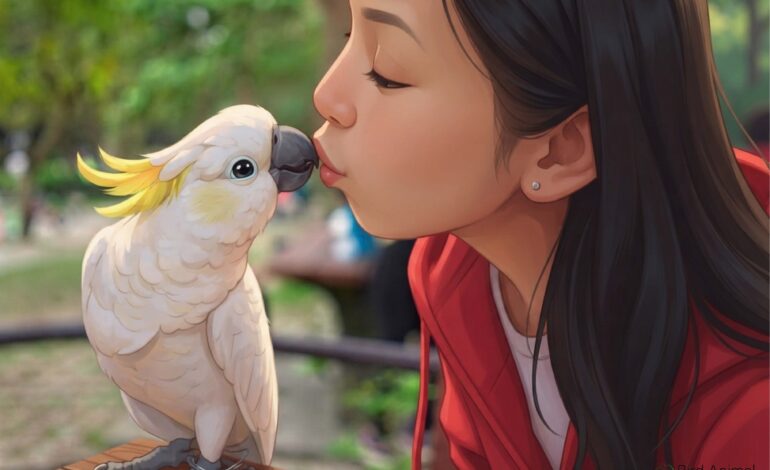
Training a parrot at first might seem confusing since your bird could avoid your hand, ignore you or suddenly bite you. Yet this does not indicate that your parrot cannot be trained. The most effective method of training a parrot is to begin with safety, establish trust, ensure clear communication, and use rewards. For those who are new to training, it is best to teach one simple behaviour at a time; once your bird has mastered these basic points, more complicated skills will be easier to teach.
If one wants to learn how to teach a parrot, it is essential to understand the bird’s specific characteristics. While machines do not have moods, preferences, fears, or individual personalities, parrots do. Rather than working against these features, effective training of pet parrots involves taking them into account. The Association of Avian Veterinarians supports the use of positive reinforcement to teach useful behaviours and considers rewards and markers to be useful training tools.
| Training Stage | Beginner Goal | Main Method | What Success Looks Like |
| Trust | Bird feels safe near you | Calm interaction | Bird approaches willingly |
| Step up | Bird moves onto your hand | Cue plus reward | Bird steps up calmly |
| Recall | Bird comes toward you | Distance plus reward | Bird responds to its cue |
| Talking | Bird copies useful sounds | Repetition and association | Bird attempts sounds |
| Bite reduction | Reduce triggers | Observation and rewards | Calmer interactions |
| Tricks | Add enrichment | Shaping and targets | Bird enjoys participating |
How Parrot Training Works for Beginners
From the very beginning, the parrot should be encouraged to behave well. Each time your parrot does something that you approve of, you must immediately reward that behaviour. This method, called positive reinforcement, causes the bird to associate its actions with a pleasant experience. The reward may be food, praise, some of your attention or permission to do something the bird enjoys. In this way, the bird will cooperate without fearing your hands. The Association of Avian Veterinarians recommends using positive reinforcement in many avian training situations.
For reward-based training to be effective, the timing must be spot on: the reward has to come right after the desired behaviour, since if it doesn’t, the parrot could associate the reward with some other action. During the first training sessions, it is necessary to keep the situation simple and predictable. The sessions should be stopped while the bird is still interested, as tired or frightened parrots learn less efficiently. You must watch the parrot‘s body language throughout the session. The primary objective should not be perfect obedience but rather cooperation, confidence and safe handling—even though the person is carrying out parrot obedience training.
How to Train a Parrot Without Using Force
Think of training as being like a conversation, not a competition; since the bird is the one who makes the decisions, you should show it that the choices which result in a reward are the correct ones. This method helps to improve communication and decreases conflict. A worthwhile rule is to make sure that the correct choice is both easy and rewarding. You should not chase a bird when it is frightened to complete a lesson.
What You Need Before Starting Parrot Training
It is essential to establish a good training environment by eliminating unnecessary distractions. Select a quiet indoor place where your parrot seems at ease; make sure that the doors and windows are closed before you start the flight exercises and remove any other pets from the room. Have the small rewards ready in advance. For nervous parrots, it may be helpful to provide a perch. Maintain a calm voice throughout the session. Since every parrot has its own preferences, discovering which treats your bird enjoys will make it easier to teach it difficult lessons.

It is best to adhere as closely as you can to a fixed routine. Even if you do not need to be entirely exact, carrying out your training in a predictable way will enable your bird to anticipate what will happen. Instead of altering your phrases, use simple and consistent verbal signals; for instance, select one word like “come” to indicate a specific behaviour rather than switching between similar phrases. Most important of all, consistency is particularly crucial when training young parrots, since they are also learning household rules and training methods.
Best Time for Parrot Training at Home
The parrot should be trained at home when it is awake, calm and attentive, and training must be avoided if the bird is frightened, tired or extremely excited; it is generally better to have many short sessions rather than one long one, and the schedule has to be adjusted to fit in with the bird’s own daily routine.
How to Build Trust With Your Parrot
Training only becomes more effective once your parrot has come to trust you, and this trust can be gained by giving the bird a bit of control during the first meetings. Sit next to the cage without attempting to make contact, speak softly, and move slowly. Give the bird a small treat each time it approaches you; the fact that it will take the food when it is near you is a real accomplishment at the beginning. In certain instances, it may take time to build trust with parrots that have been past-traumatised, as their past experiences can influence the way they react.
Many people inquire as to the best method of getting a parrot to accept you quickly, but this should not be your primary objective. Hand taming works because of a series of safe experiences gained over time. You should not pick up the bird if it refuses to take your hand or if it squeezes without cause. Instead, make gradual progress by praising behaviours such as looking in your direction, moving towards you, or calmly accepting food. In the end, your presence will be associated with positive outcomes rather than pressure.
Signs Your Parrot Is Beginning to Trust You
Trust is generally shown in small and obvious ways; for instance, your parrot may remain relaxed when you approach, may eat more boldly, or may move closer on its own. With people it trusts, some birds will begin to play, preen, or make sounds as they usually do. Therefore, you should look out for these specific behaviours in your bird rather than for a general sign.
How to Teach Your Parrot to Step Up
Parrot step-up training teaches one of the most practical abilities for everyday situations. As VCA states, “step up” is considered a basic command for pet birds. This behaviour consists of the bird moving from a surface onto your outstretched hand or finger. Start at a spot which the bird finds safe. Hold your hand out without pushing against the bird and say your chosen step-up command once. Reward the bird every time it makes a calm movement towards your hand.
Do not continue to poke the bird’s belly until it has moved over, as this approach might make easily irritated birds avoid you; instead, break the behaviour down into smaller steps. As your first reward, give it when the bird looks at your hand; then reward it when it leans towards your hand; next, reward it when one of its feet makes contact with your hand; and finally, reward it when it takes the full step. Learning will become clearer with these step-by-step methods for training parrots, since each stage appears achievable.
Step-Up Training for a Parrot Afraid of Hands
If the cause of the bird’s fear is the hands, then use a perch which is held in the hand. Before asking the bird to move, compliment it on staying calm when it is near the perch. When the bird is stepping onto the perch with confidence, gradually move your hand towards it. Do not speed up the process; fear is generally reduced by several safe experiences rather than a single dramatic one.
How to Train a Parrot to Come When Called
Parrot recall training is a method of teaching your bird to go towards you when it hears a particular cue. Begin indoors at a very short distance; the bird can start from a safe perch while you are standing nearby. Make it clear that a valuable reward is on offer. Say your selected recall command once and then reward any obvious movement towards you. Early practice might consist of just one step or a small hop.

After your parrot has consistently succeeded, gradually increase the distance, rather than suddenly going from two feet to the other side of the house overnight. Reliable recall is achieved through slow and steady practice. Indoor recall is helpful for mental stimulation because the bird has to listen, move, and perform a simple task. Nevertheless, simply succeeding indoors does not mean that uncontrolled flying outdoors is safe, as doors, wind, predators, traffic, and unfamiliar surroundings can all affect it.
How to Train a Parrot for Better Indoor Recall
Carry out training between two safe locations that are near to each other. Increase the distance only once your bird is responding with confidence. When responses slow down, make the next trial easier. This will avoid causing frustration. Reliable recall is achieved through repeated successful trials rather than by continuously testing the bird’s abilities beyond its current level.
How to Teach a Parrot to Talk
People who are just starting often ask themselves how best to teach a parrot to talk. Begin by using short words that the bird picks up on during serious situations, such as saying “hello”, the bird’s name, or some other distinct phrase. Say the word again with the same level of energy. Link the words to actual events when you can. For instance, say “hello” when you go into the room. This gives the sound proper context rather than reducing the practice to simple repetition.
The extent to which you can train a talking parrot varies from bird to bird. A few parrots pick up speech easily, while others tend to imitate whistles, everyday sounds, or their natural calls. The parrot’s species can affect its ability to mimic sounds, and the bird’s individual character is also a factor. Merck points out that African grey parrots are regarded as good mimics, but nobody should expect each bird to acquire the same vocabulary. It is important to reward your bird when it attempts something, without forcing it to perform.
Best First Words for Talking Parrot Training
When selecting words, go for short, clear, and practical ones since they are useful in daily life. By repeating meaningful words frequently, you give your parrot more context. Keep your tone bright without raising your voice. If your parrot tries to talk, reply in a friendly way. Speech should stay a pleasant way of interacting rather than something that you have to pass a test for.
How to Stop a Parrot From Biting
If anyone is looking for a way to stop their parrot biting, they should first consider why the biting occurs. It may be due to fear, territorial behaviour, overstimulation, unwanted touching, or having ignored the warning signals. It is not correct to suppose that every bite means your parrot is trying to assert dominance. You should examine the circumstances surrounding the incident. By understanding the parrot’s biting behaviour, you will be able to deal with the cause rather than simply punishing the reaction.
The VCA suggests that step-up behaviour should be retrained gradually and that special rewards should be given during the process. You should avoid yelling, hitting, shaking, or frightening your bird, as such reactions could damage the trust you have with it. Instead, keep an eye on any early signs of tension and stop pushing interactions too far—reward the bird when it remains calm. It is easier to change undesirable behaviour if you teach an alternative response, for instance by teaching your parrot to move onto a different perch rather than forcing it to carry out the unwanted handling.
Reading Bird Body Language Before a Bite
Your parrot might lean back, freeze, pull away, open its mouth, or alter its position before it bites. These signals differ from one individual to another and from one species to another. Take the time to study the patterns of your own parrot carefully. By respecting an early “no”, you reduce the likelihood that your bird will respond with a more forceful bite.
How to Use Treats for Parrot Training
For parrot training, the treats you use should be valuable enough to encourage your bird but small enough to be eaten quickly. If the rewards are large, the training is interrupted since your bird will take too long to eat them. You should try a variety of foods that are safe for birds and included in the diet plan approved by your veterinarian. Some parrots will work for food, while others prefer praise, toys, scratching, or other activities. A reward is only effective if your bird actually considers it valuable.
When positive reinforcement is used with parrots, giving the reward immediately after the correct behaviour occurs makes the reinforcement more precise. Clicker training can be used to indicate that exact moment. According to the Association of Avian Veterinarians, the clicker functions as a “bridge” between the correct behaviour and the reward that follows. A verbal marker can have the same effect, provided it is used consistently.
Choosing Rewards for Parrot Training
Make the rewards small and suitable for your bird’s regular diet; valuable food should enhance ordinary nutrition rather than replace it. If there are any dietary restrictions, your avian veterinarian can assist. The ideal reward is safe, quick to eat, and exciting enough to make your bird want to try to earn it again.
| Reward Type | Best Use | Main Advantage |
| Tiny food reward | New behaviors | Fast and motivating |
| Verbal praise | Known behaviors | Always available |
| Favorite toy | Playful parrots | Adds enrichment |
| Attention | Social birds | Strengthens interaction |
| Click followed by reward | Precise timing | Marks exact behavior |
How to Potty Train a Parrot
Training your parrot to use the toilet can help you teach it to go to appropriate places. But it’s important to have realistic expectations. Birds have a natural tendency to eliminate frequently. VCA points out that most birds usually drop faeces about every 20 to 30 minutes. The timing will vary depending on the species, the food, the level of stress, and the bird’s health. VCA also cautions that trained birds might retain their droppings. Therefore, exerting too much pressure is not a good idea.
Rather than teaching your parrot to “hold it”, observe the bird’s natural behaviour. Take it to the right place when you think it’s about to eliminate. Use a single cue. Give positive reinforcement when it times its elimination correctly, without strongly reacting when it goes wrong. Do not punish failures to do so. It is more important that the bird has healthy toileting than that the furniture remains clean. If the droppings suddenly change in how often they occur, in amount, in colour or in consistency, you should consult an avian veterinarian since such changes can at times be a sign of illness.
A Safe Parrot Potty Training Routine
Note when your bird usually eliminates after waking up, after eating, or after spending some time on a perch. Once you have determined that the timing is appropriate, gently take the bird to an accepted place. Use the same signal every time. Give a reward whenever the bird succeeds without requiring it to hold for a long time. Any accidents should stay boring and should not be punished.
How to Teach Your Parrot Simple Tricks
Training parrots to perform tricks makes learning a more enjoyable experience. Begin by using simple actions that your bird is already capable of carrying out naturally, such as turning, waving, climbing, touching, retrieving, or moving to a perch. Keep the behaviour simple at the beginning. Give rewards as the bird makes progress towards the final action; this approach avoids confusion. Moreover, the training also helps with socialisation as long as it stays pleasant when carried out with trusted family members.
A good basis is target training. According to the Association of Avian Veterinarians, target work involves teaching a bird to touch an object as a form of reinforcement; it can then assist with tasks such as moving the carrier. Target training can also help with parrot trick training, as it lets you direct the bird’s movements without physically pushing it.
Easy Target Training for a Beginner Parrot
Put a safe target close to your bird without making contact necessary. First, give a reward for any interest shown. When your parrot touches the target, highlight that moment and then reward it. Bit by bit, move the target a little further away. Eventually, your bird will be able to learn to follow it to a perch, a carrier, or a trick position.
Common Parrot Training Mistakes to Avoid
A frequent error is to act too hurriedly, while in other cases people keep giving the same commands until they cease to be noticed. Some owners only begin training when there are problems. More effective advice for training parrots is to teach useful behaviours before emergencies occur. It is important to use clear signals, break the training down into simple steps and ensure frequent success. Patience and consistency are much more important than trying to win each interaction.
Another error is ignoring the bird’s emotional state. When a parrot is frightened, it’s not being difficult just because it refuses to comply; instead, the difficulty should be reduced. Bad timing can also unintentionally reinforce the incorrect behaviour. For instance, showing dramatic attention right after the bird screams may reinforce screaming in certain cases. Merck recommends that owners notice how their responses may reinforce particular behaviours.
| Common Mistake | Why It Causes Problems | Better Approach |
| Forcing physical contact | Can create fear | Build voluntary interaction |
| Changing cues constantly | Creates confusion | Use one clear cue |
| Training too long | Reduces attention | End while interest remains |
| Punishing bites | Can damage trust | Find the trigger |
| Giving huge treats | Slows training | Use tiny rewards |
| Increasing difficulty quickly | Creates failure | Progress in small steps |
| Ignoring health changes | May miss illness | Contact an avian veterinarian |
Beginner Case Study: From Fearful to Stepping Up
Picture a parrot who has recently been adopted and is called Milo. Every time a hand enters his space, Milo moves away. Instead of forcing contact, his owner starts to reward any calm attempts to approach. Following several such gradual sessions, Milo begins to take food while sitting beside the hand. Later on, he puts one foot on the hand. In the end, he climbs up completely. The point is not that all parrots go through this precise sequence. The example illustrates that large goals can be broken down into several manageable steps.
How long does it take to train a parrot?
There is no single dependable solution; certain behaviours show up quickly, whereas others take weeks or even longer—the bird’s past experiences, its personality, age, species, level of motivation, and health all play a role. Also, some parrot training methods are more difficult than others; for example, touching a target might lead to quicker progress than relying on reliable recall. In some cases, speech may develop slowly or never reach a major level of ability.
It’s better to concentrate on making progress rather than sticking to strict deadlines. A bird that today calmly takes your hand has already learned a valuable lesson; do not spoil that achievement by asking it to display five new behaviours at once. It is patience and consistency that build up stronger foundations. The aim should continue to be a reliable understanding rather than quick performance. After the bird has realised that participating leads to safe, predictable outcomes, training usually progresses more rapidly.
Signs Your Parrot Training Is Working
Advancement is shown when your bird takes part voluntarily more frequently; you might observe quicker responses, a calmer temperament, better recall, or a reduction in defensive behaviour. The bird might also go to the training area with enthusiasm. These signs indicate that your methods are now clear and satisfying.
A Simple Daily Parrot Training Routine for Beginners
A calm, kind interaction can be the starting point for a practical daily routine. You should then include one skill that is already known and another that is a bit more recent. The routine should end with something that your parrot already understands. This method helps maintain high confidence and makes training sessions feel like pleasant interactions rather than endless drills. Regular training offers valuable engagement for intelligent companion birds. As Merck points out, regular interaction and training can contribute to the wellbeing of pet birds.
There is no need for your routine to cover all the skills each day; for example, one day could be devoted to step-up exercises, while another might place greater emphasis on recall or speaking. It is important to combine learning with periods of rest, play, foraging, and ordinary social activities, as this balance provides mental stimulation without turning every interaction into a lesson. Proper training should improve your relationship rather than take control of it.
| Session Stage | Approximate Focus | Example |
| Warm-up | Easy familiar behavior | Calm target touch |
| Foundation | Useful daily skill | Step up |
| New learning | One small challenge | Short recall |
| Enrichment | Fun behavior | Spin or wave |
| Finish | Easy success | Known cue and reward |
Example Parrot Training Session for Beginners
Start when your parrot appears relaxed; begin by rewarding one behaviour that it knows well. Then, carry out your primary skill until you have achieved several successful repetitions. Only introduce one small new element when you are still confident. End the session with a simple cue followed by a reward. Successfully concluding the session will make the next one more appealing.
Safety Tips for Training Parrots for Owners in the United States
Training must never take the place of proper veterinary care, and any sudden aggression, weakness, loss of appetite, abnormal droppings, or significant personality changes should be regarded as requiring attention. Birds can conceal their illness until the symptoms are obvious. According to VCA, you should contact a veterinarian if any unusual changes indicate that a bird is unwell. In the United States, pet owners should seek out veterinarians experienced in treating birds rather than relying solely on general pet advice.
It is important to consider home safety when having training sessions. Make sure to close the windows before conducting flight practice and fasten the doors. Other animals should be kept under control. One should avoid exposing birds to unsafe fumes or heated non-stick products. The VCA cautions that overheated PTFE-containing cookware can emit fumes that are very dangerous to birds. Proper parrot training at home always starts with managing environmental hazards.
When Parrot Behaviour Needs Veterinary Attention
If you notice any sudden changes in your bird’s behaviour with no apparent reason related to training, you should consult an avian veterinarian. Individual cases of lethargy, difficulty in breathing, changes in appetite, abnormal droppings, weakness, injuries, or sudden displays of aggression all require professional intervention. Training cannot remedy a medical issue, so your bird’s health should take priority.
Frequently Asked Questions About How to Train a Parrot
It is common for beginners to think that training should be similar to the way dogs are trained. While parrots can learn many useful cues, cooperation is more effective than physical control. Training parrots to be obedient should teach them useful skills, ensure safe handling, build trust, and promote communication. The parrot must come to understand that reacting to you leads to reliable, beneficial consequences.
The best all-round approach involves building trust, providing clear signals, offering useful rewards, gradually increasing difficulty, and being careful to observe. No single technique works miracles. Different parrots require different rates of progression. Experienced trainers modify the lesson whenever the bird has difficulty rather than just putting more pressure on it.
What is the simplest method for training a parrot?
Begin with reward-based training and focus on one simple behaviour. Select a behaviour that your bird can easily achieve. As the bird carries out the correct behaviour, praise it promptly and give it a small reward. Gradually increase the difficulty of the tasks. In this way, your parrot will have a clear reason to take part.
Can you train an older parrot?
Yes, older parrots are capable of learning new behaviours; past experiences can influence how quickly they trust new people or methods, so if the bird has a history of fear, it is best to begin slowly. Being older does not mean that learning is impossible.
How can you get a parrot to trust you?
Start with a calm demeanour and engage voluntarily. Give rewards without insisting on physical contact. Respect the bird’s attempts to avoid you and become familiar with its warning signs. As time goes on, the bird will gradually develop greater confidence around you due to the repeated safe experiences.
How long should you train a parrot each day?
There is no single ideal number for each parrot; it’s better to keep an eye on the situation rather than fixating on the clock. Generally, short and successful practice is more effective than trying to carry on for a long time, so finish before the bird becomes tired, fearful, or loses interest.
Can Every Parrot Learn to Talk?
No. Many parrots can imitate sounds, although ability varies widely. Species, personality, environment, and individual preference all influence vocal learning. A bird can still communicate wonderfully without speaking human words.
What Should You Do When Your Parrot Won’t Step Up?
Return to easier steps instead of forcing the behaviour—reward calm interaction near your hand or perch. You can also use target training to guide movement gradually. Rebuilding confidence often solves more than physical pressure.
Should You Use Clicker Training With a Parrot?
Clicker training can make timing more precise because the sound signals the correct behaviour immediately. The click must consistently predict a reward. A short verbal marker can also work when you use it clearly and reliably.
Conclusion: How to Train a Parrot With Patience
Learning how to train a parrot becomes much simpler once you stop looking for shortcuts. Begin with trust. Teach step-up behaviour next. Add recall, speech, potty habits, and tricks gradually. Watch your bird carefully during every lesson. The best training respects choice while making useful behaviour rewarding.
Good results come from patience and consistency, sensible rewards, clear cues, and a safe relationship. Whether you’re working on Parrot recall training, talking parrot training, Parrot potty training, or how to stop parrot biting, the same principle applies. Make progress small enough to succeed. Reward what you want. Respect what your parrot communicates. With time, training can become one of the most enjoyable parts of living with your bird.


